
 By
By 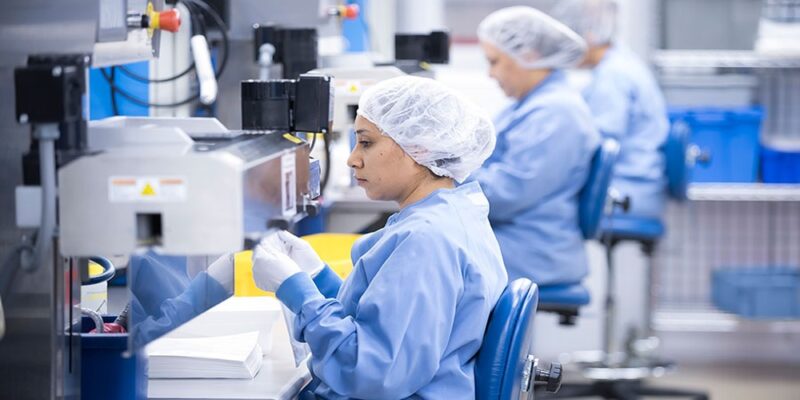
Contract manufacturing of medical devices gives device companies access to validated production lines, certified quality systems, and experienced engineering teams without the capital burden of building a dedicated facility. Hospitals, clinics, and surgical centres around the world depend on a steady flow of devices that meet stringent regulatory standards. Disruptions in that supply chain put patient care at risk. A reliable contract manufacturing partner prevents those disruptions by maintaining capacity, inventory buffers, and documented processes that perform consistently across every production lot.
Why Device Companies Outsource Production
Capital and Expertise Constraints
Building a medical device production facility requires investment in clean rooms, inspection equipment, environmental monitoring systems, and qualified personnel. A single ISO Class 7 clean room installation can cost between 1.5 and 3 million Singapore dollars. Staffing that facility with process engineers, quality assurance specialists, and trained production operators adds recurring expense that many device start-ups and mid-sized companies cannot absorb during early commercial phases.
Outsourcing transfers these fixed costs to a contract manufacturer that spreads the investment across multiple client programmes. The device company pays per unit produced, converting capital expenditure into variable cost that scales with actual revenue.
Regulatory Complexity
Medical device regulations differ across markets. The US FDA enforces 21 CFR Part 820, the European Union applies the Medical Device Regulation 2017/745, and Singapore’s Health Sciences Authority maintains its own distinct approval pathway. A contract manufacturer experienced in serving these markets understands the documentation, labelling, and post-market surveillance requirements specific to each jurisdiction and can prepare submissions accordingly.
Dr Goh Bee Tin, Senior Consultant at the National Dental Centre Singapore, noted in a 2024 healthcare conference: “Reliable supply of surgical instruments and implantable devices depends on manufacturers who understand both the clinical application and the regulatory environment. Contract manufacturers with cross-border experience reduce the time from design freeze to patient use.”
Ensuring Reliable and Uninterrupted Supply
Production Planning and Demand Forecasting
Reliable supply begins with accurate demand forecasting. The contract manufacturer works with the device company to establish rolling forecasts, typically covering 12 to 18 months. These forecasts drive raw material procurement, production scheduling, and finished goods inventory targets. Safety stock levels are calibrated to historical demand variability and supplier lead times for each material category.
When demand spikes occur, the manufacturer draws on buffer inventory while ramping additional production shifts. Cross-trained operators move between product lines to absorb volume fluctuations without requiring new hiring cycles or extended overtime schedules.
Raw Material Qualification and Dual Sourcing
Every material that contacts the patient or influences device performance must be qualified through biocompatibility testing, certificate of analysis verification, and incoming inspection. Contract manufacturing of medical devices at scale requires dual-sourced raw materials for critical components. If one supplier faces a disruption, the alternative source maintains production continuity without requalification delays.
Quality Management and Compliance
ISO 13485 as the Foundation
ISO 13485 governs the quality management system for medical device manufacturing. The standard mandates documented procedures for design control, risk management, supplier evaluation, corrective and preventive actions, and management review. Compliance with this standard forms the minimum expectation for any contract manufacturer serving the medical sector.
Facilities also maintain:
- FDA registration and adherence to current Good Manufacturing Practice requirements
- CE marking capability under the EU MDR for European market access
- Validated processes for injection moulding, metal injection moulding, CNC machining, and assembly
- Electronic batch records linking each unit to its raw material lots, process parameters, and inspection results
Clean Room Production Standards
Many medical devices require assembly in controlled environments. ISO Class 7 and Class 8 clean rooms limit particulate contamination to defined thresholds. Environmental monitoring captures temperature, humidity, and particle counts at scheduled intervals throughout each shift. Gowning protocols and airlock entry systems prevent contamination from personnel and external sources.
Capabilities That Support Reliability
A contract manufacturer’s ability to deliver consistent supply depends on several operational factors:
- Redundant equipment for critical process steps, ensuring that a single machine failure does not halt production
- Preventive maintenance programmes scheduled during planned downtime windows
- In-house metrology with coordinate measuring machines, optical inspection, and surface roughness measurement
- Sterilisation coordination with qualified external providers for gamma, EtO, or electron beam methods
- Packaging validation ensuring device integrity through distribution and storage conditions
These systems reduce unplanned downtime and protect the device company’s launch schedules and customer commitments.
Singapore’s Position in Medical Device Supply
Singapore hosts over 60 medical technology manufacturers and ranks among the top global exporters of medical devices. The country’s regulatory framework, skilled workforce, and strategic location along major shipping lanes between Asia, Europe, and North America make it a logical base for contract manufacturers serving international device companies.
Proximity to raw material suppliers in the Asia-Pacific region shortens procurement lead times. Established logistics infrastructure supports both air and sea freight, enabling rapid delivery to distribution centres worldwide.
Building a Dependable Production Partnership
Device companies seeking uninterrupted access to certified, high-quality products benefit from partnering with a proven medical device production partner that combines validated processes, regulatory literacy, and supply chain resilience. That partnership transforms contract manufacturing of medical devices from a transactional arrangement into a strategic advantage that supports patient safety, market growth, and long-term commercial stability.






Comments